
Happily, Ever After

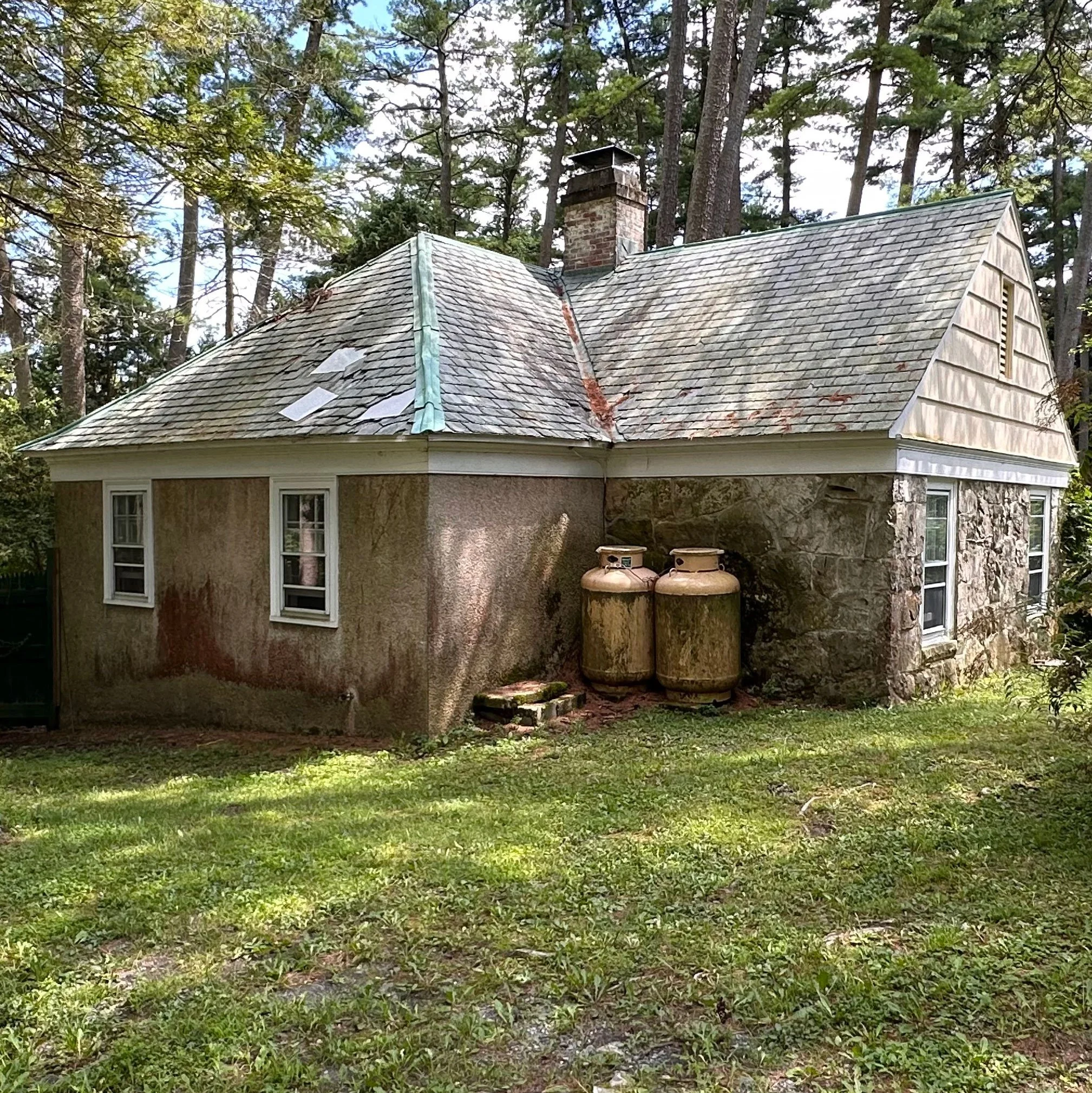
The Chestnut and The Main House both had slate tile roofs installed when the properties were built in the early 1900s. The slate had not been maintained or professionally repaired in over 100 years, so it was literally falling to bits. As a result, no insurance company would cover the roofs, and they were listed as exclusions on the policy.
Obtaining any sort of insurance for the estate was difficult because the previous owner had filed multiple claims for fallen trees, and the adjacent property had burned down, leading to a multi-million-dollar lawsuit. As a result, the address was blacklisted by all but the most daring carriers.
Our first foray into roofing at Chesterfield was for The Music Studio. We replaced an old asphalt shingle roof with a new one, viewing it as an affordable and straightforward way to protect the property — a placeholder, if you will — until we could find a permanent solution for The Main House and the neighboring cottage, The Chestnut.
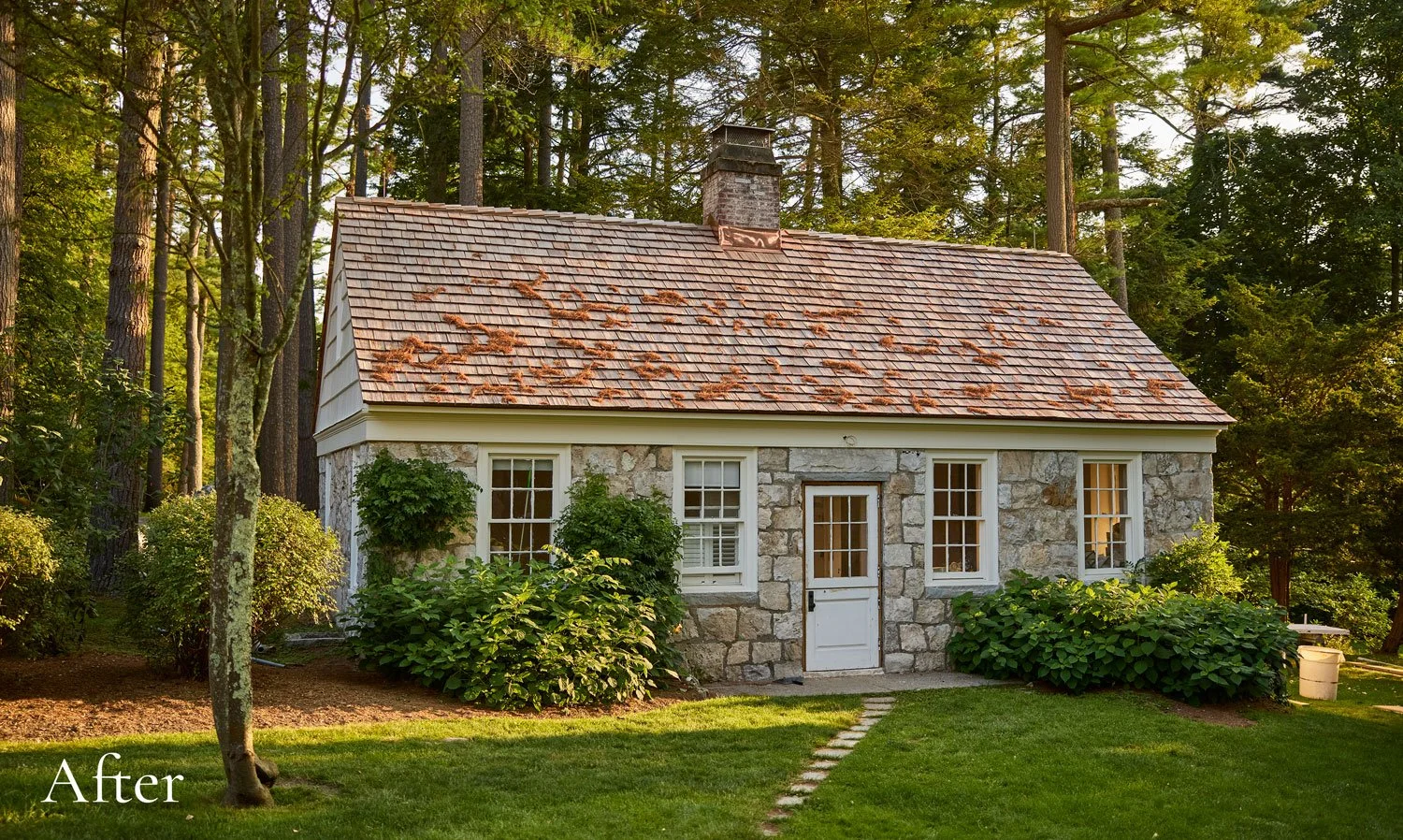
We decided to use The Chestnut as a pilot project for choosing the perfect roof. Once selected, we could then replicate it elsewhere on the estate, since it was a small-scale version of The Main House and was built at the same time using the same quarry stone from the estate.
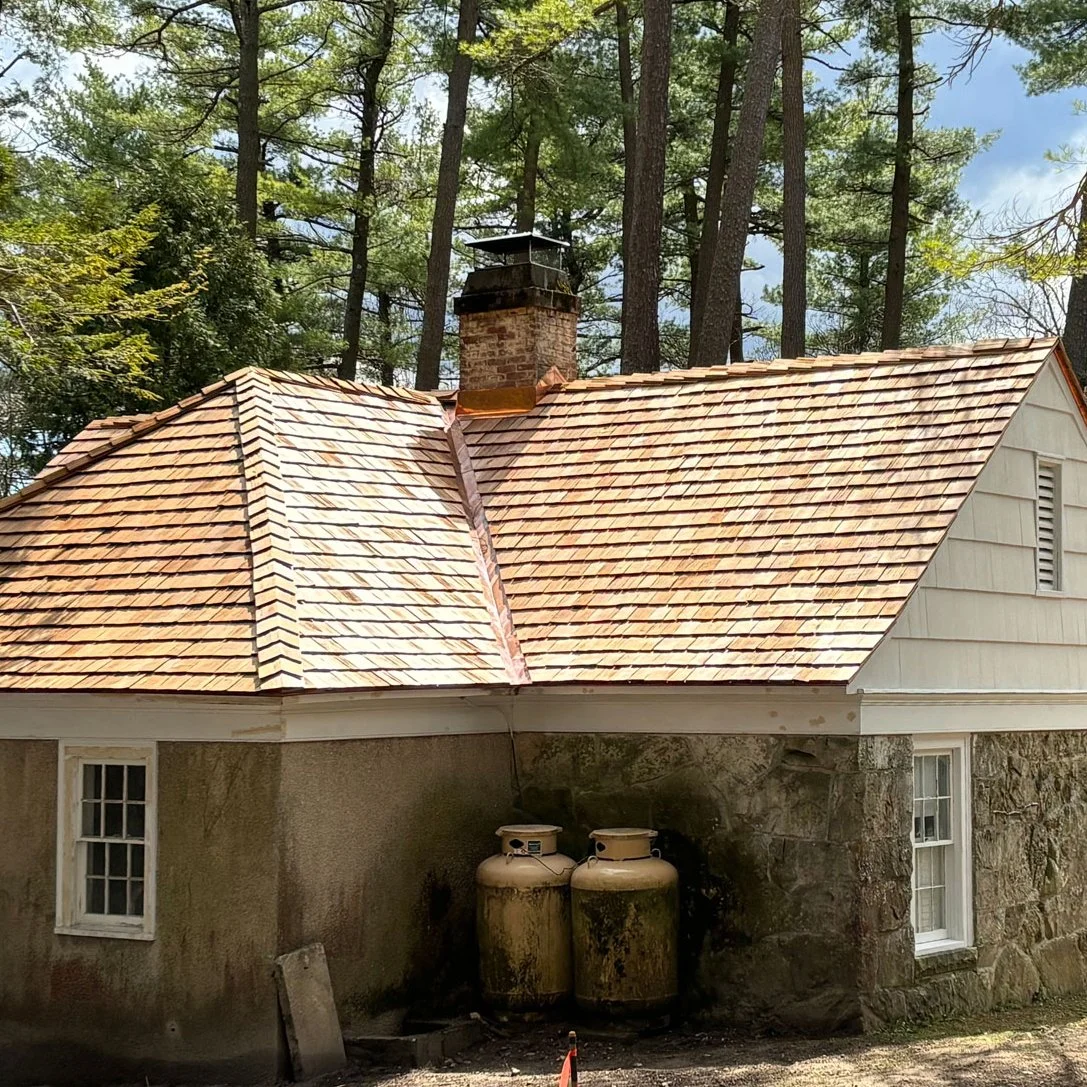
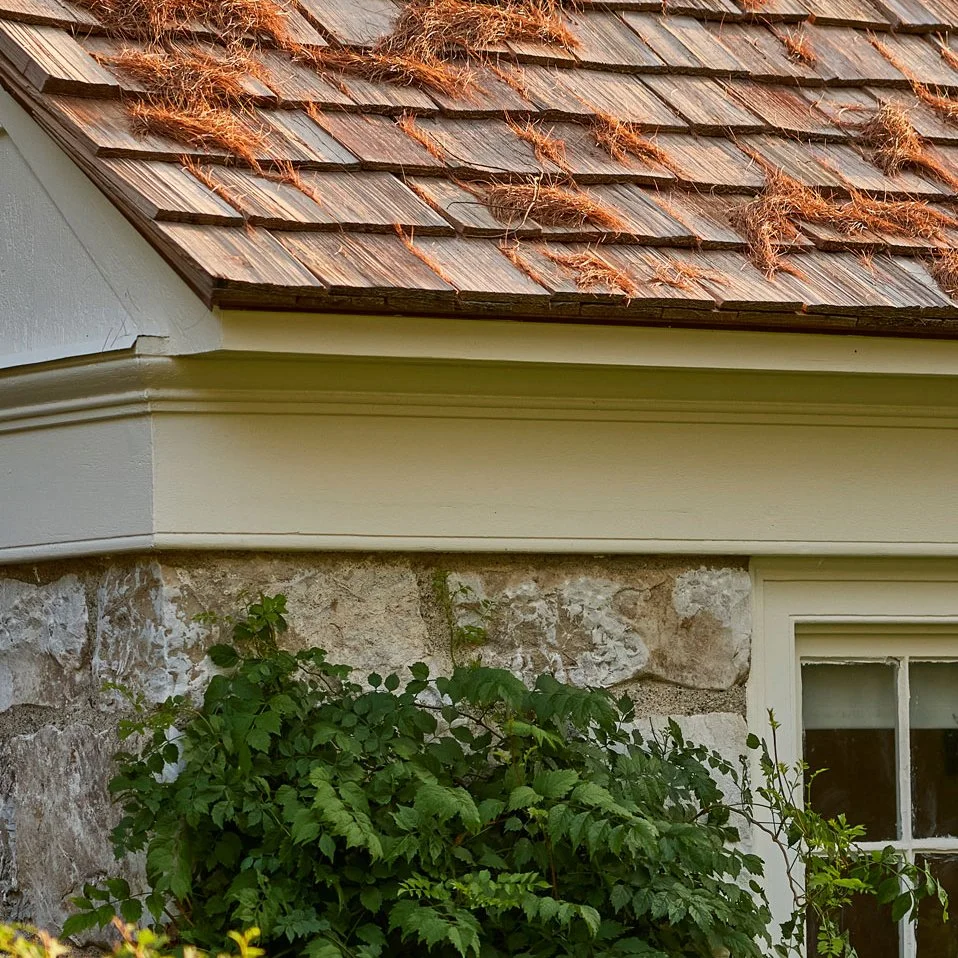
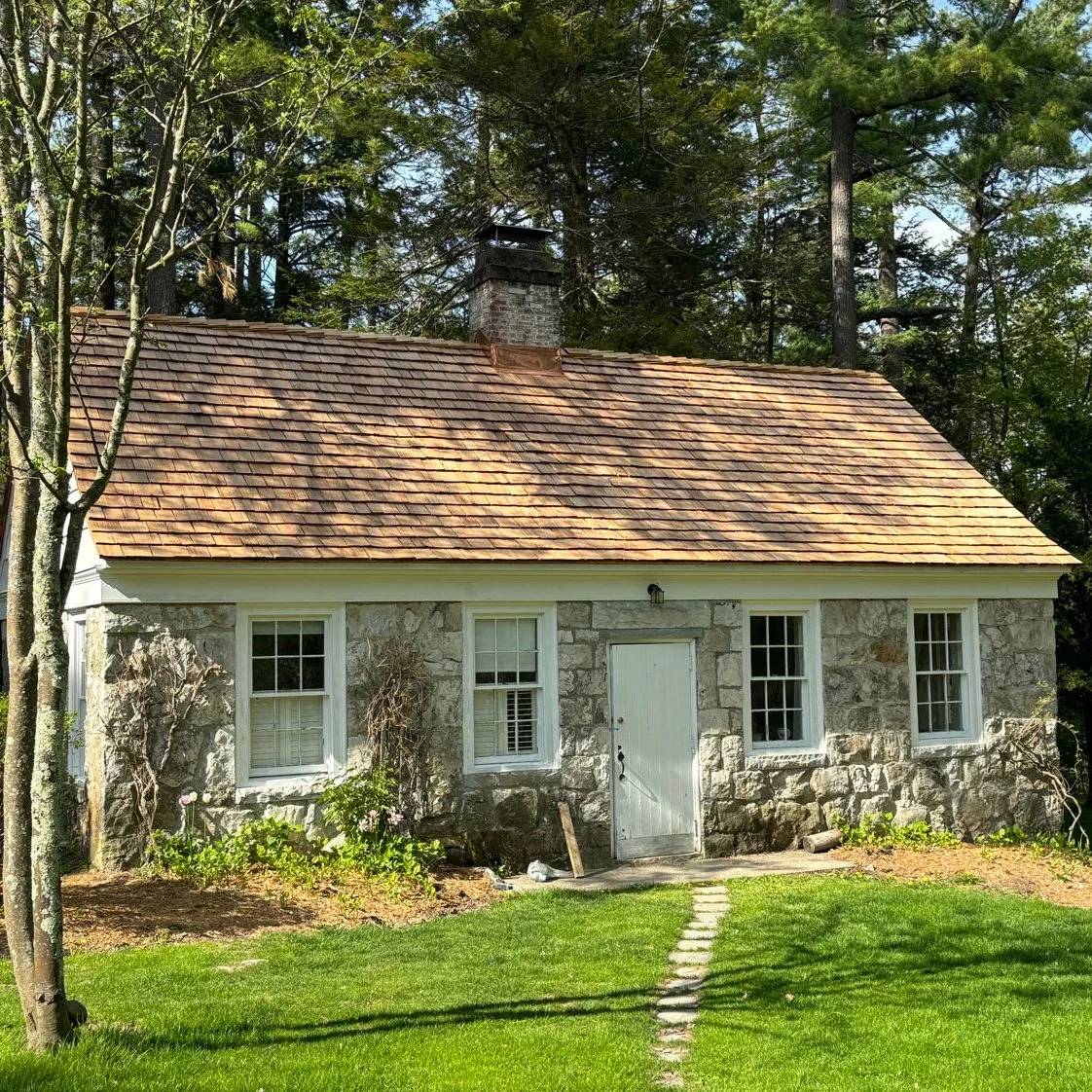
We chose lightweight red cedar shakes — hand-split to achieve a slightly irregular vintage look. .…The perfect storybook cottage.
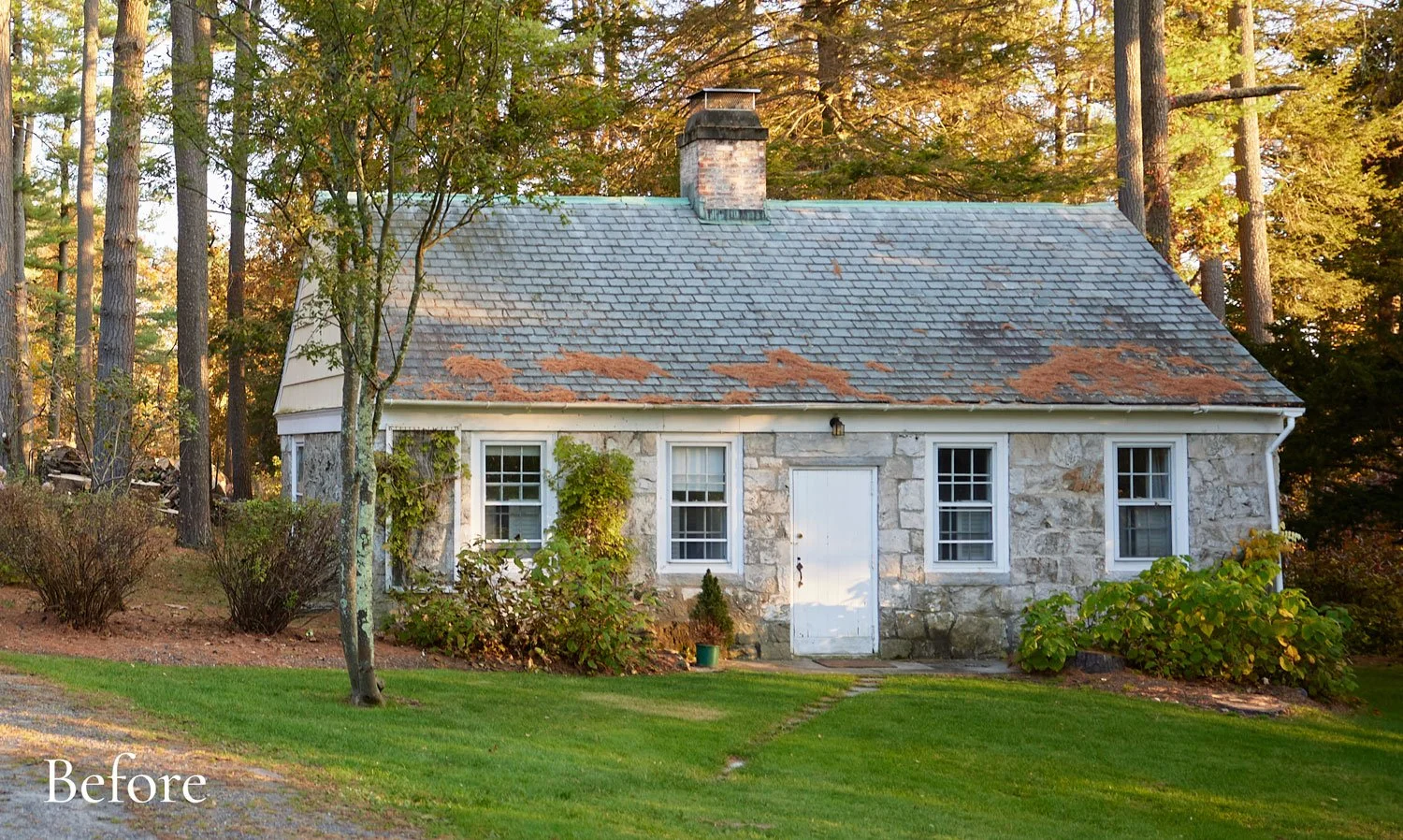
Michael and I spent a lot of time examining the slate tile, which was in terrible condition. Every time a tree fell on the house, or a roof tile was damaged in a storm, the former owner would send Roger to Home Depot to buy some plastic tiles — the kind painters use to mix paint — and he would make a valiant attempt to fit the plastic tile into the hole. As a result, both The Main House and The Chestnut appeared to be pockmarked, with clear and coloured plexiglass tiles scattered among the original slate.
We agreed that the slate’s color did not blend well with the natural stone façade — it washed it out, making it look lifeless and dull. It is also very heavy, which would limit the design options for The Main House because the interior structure would need reinforcement to support the weight, potentially reducing room sizes and ceiling heights. Not a problem for me at 5’4” but it could be an issue for Jack at 6’6”.
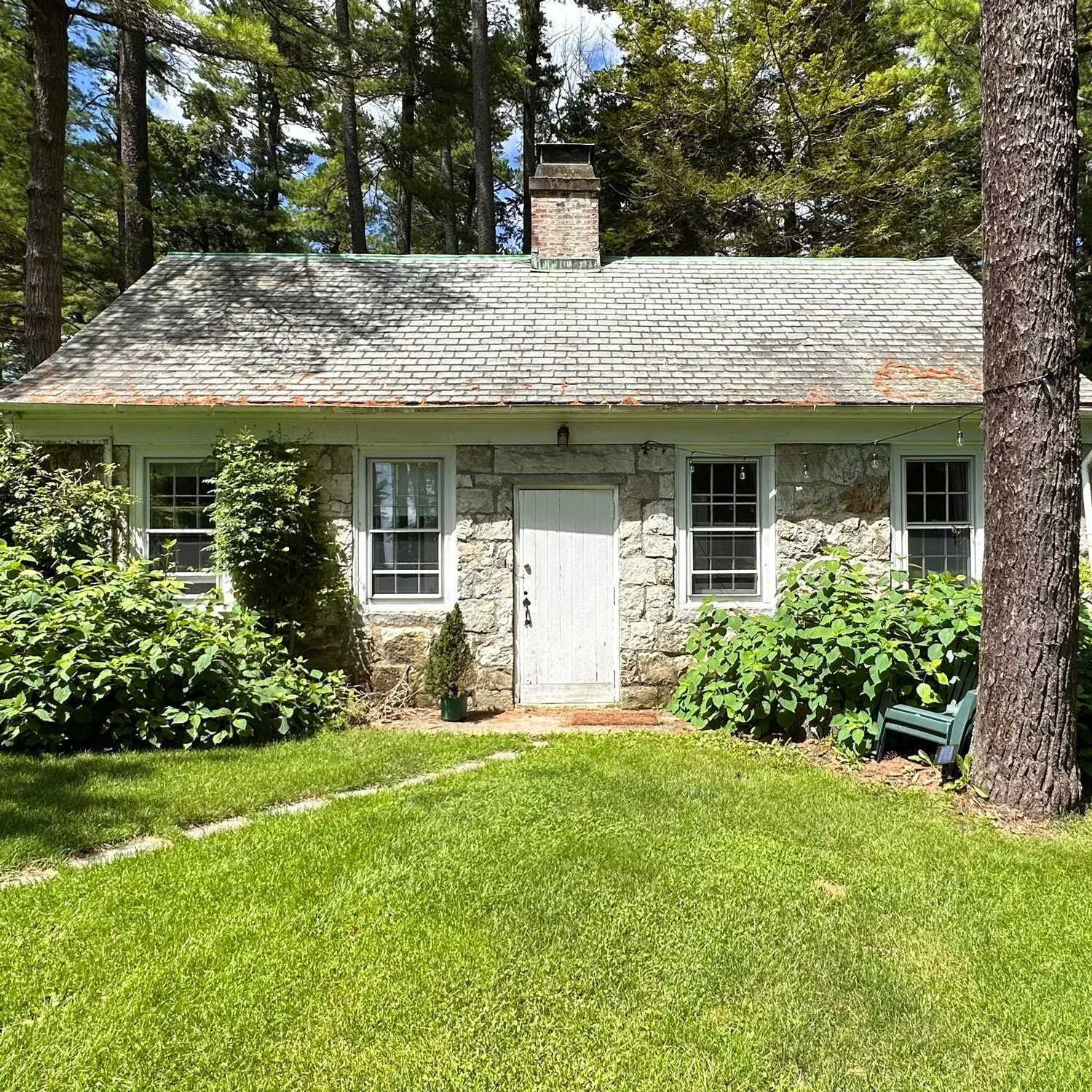
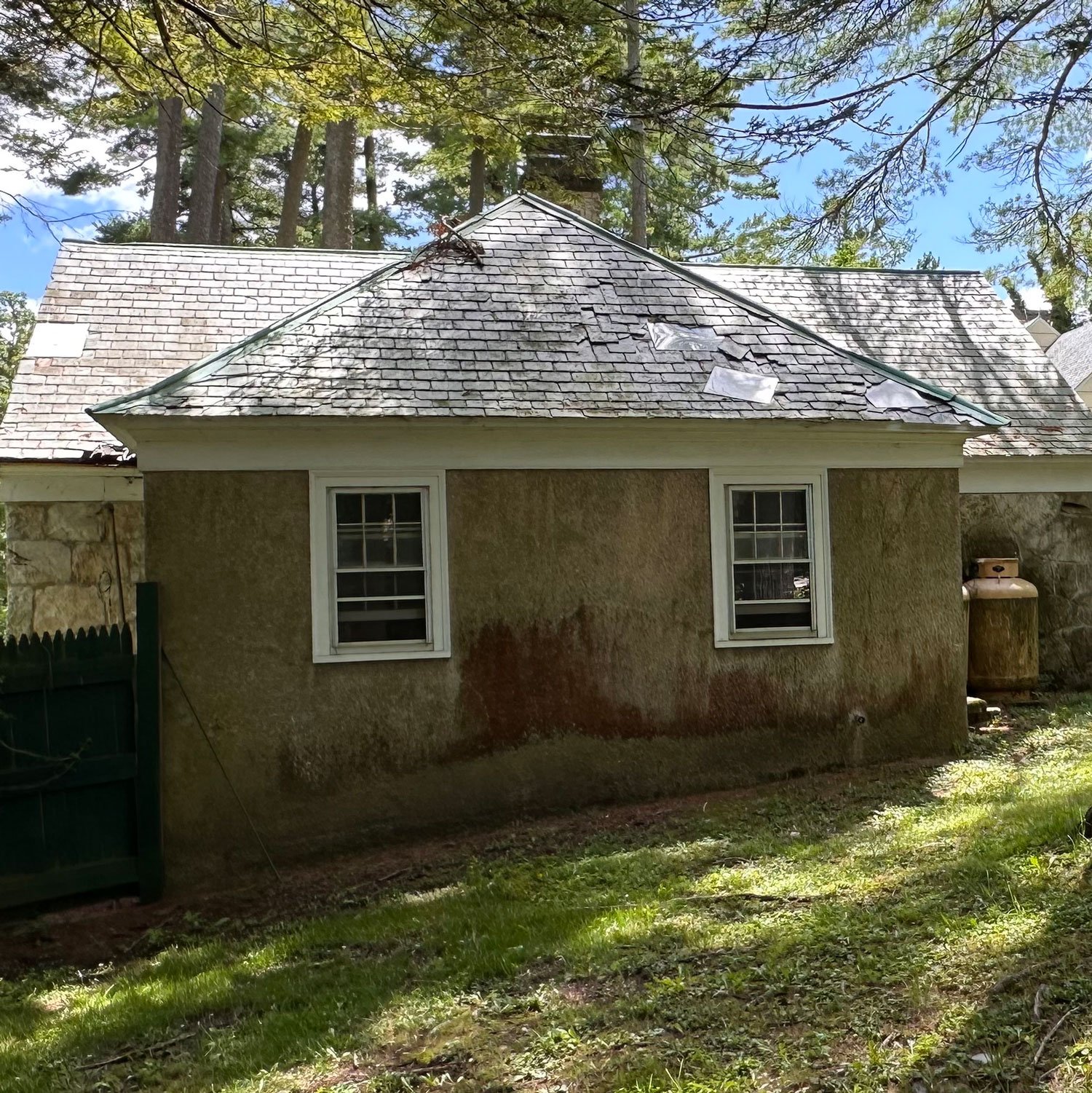
We considered pulverizing the original slate tiles and reusing them on the driveway to avoid costly haul-away fees. The roofing contractor thought this was a terrible idea, saying it would create a million rusty nails that could damage people’s tires. We don’t want that. So, we will explore recycling options as the old roof tiles are removed. If we can salvage any, we will.
We chose lightweight red cedar shakes — hand-split to create a slightly irregular vintage look. These roof tiles are beautiful but expensive, so we considered seamed metal as an alternative, which costs less than cedar but more than asphalt. However, it didn’t look right when we held up the samples. The texture and tone caused the same problem of clashing with the natural stone façade instead of complementing it.
In the end, we decided to find cost savings elsewhere in the project and chose the cedar. I am so glad we made that choice. The new roof creates the perfect storybook cottage, so charming that you almost expect to see Hansel and Gretel skipping down the footpath.
Over and out.