
Ashes to Ashes, Dust to Dust

Although we didn’t find any mold in The Main House, we did uncover asbestos. We bought the estate “as is”, with no inspections except for a structural engineer who checked The Main House’s foundation and found it to be in good shape for its age, aside from a few minor repairs. We also surveyed the house for asbestos and discovered a small amount covering pipes in the basement, which is typical for properties of that era. We agreed to a repair credit at closing for the structural repairs and negotiated a trade with the seller for the asbestos removal, receiving a Steinway grand piano, a dining room table and chairs, and several antique mirrors in lieu of the remediation cost.
The asbestos company had a busy schedule, so they couldn’t finish the project until early December. However, when they arrived, they meant business. I had no idea that asbestos remediation was such a complex process. The entire basement was sealed inside a protective bubble, while workers in white hazmat suits with air filtration masks carefully removed the asbestos from the visible pipes. They soon found out that one of the asbestos-covered pipes extended beneath the entire house.
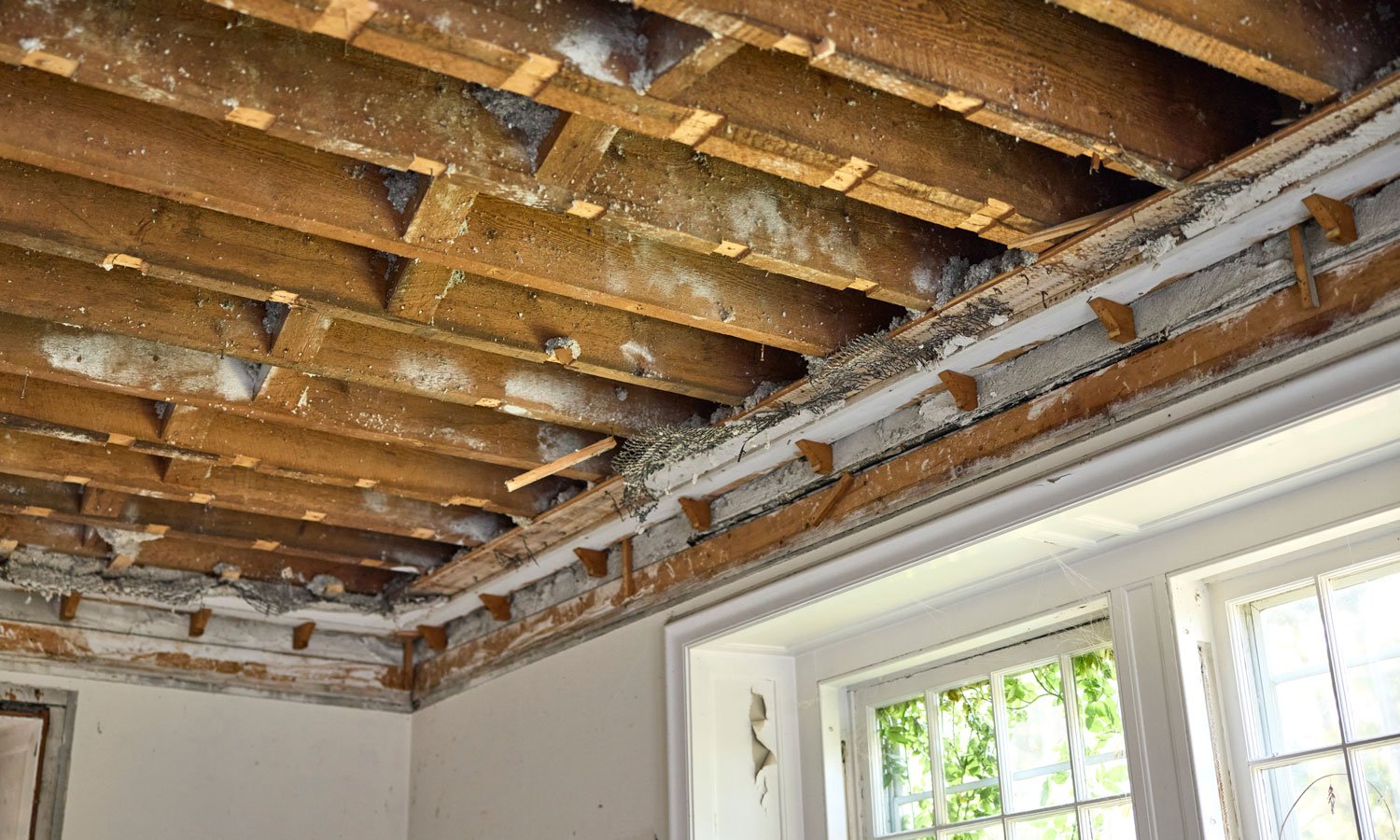
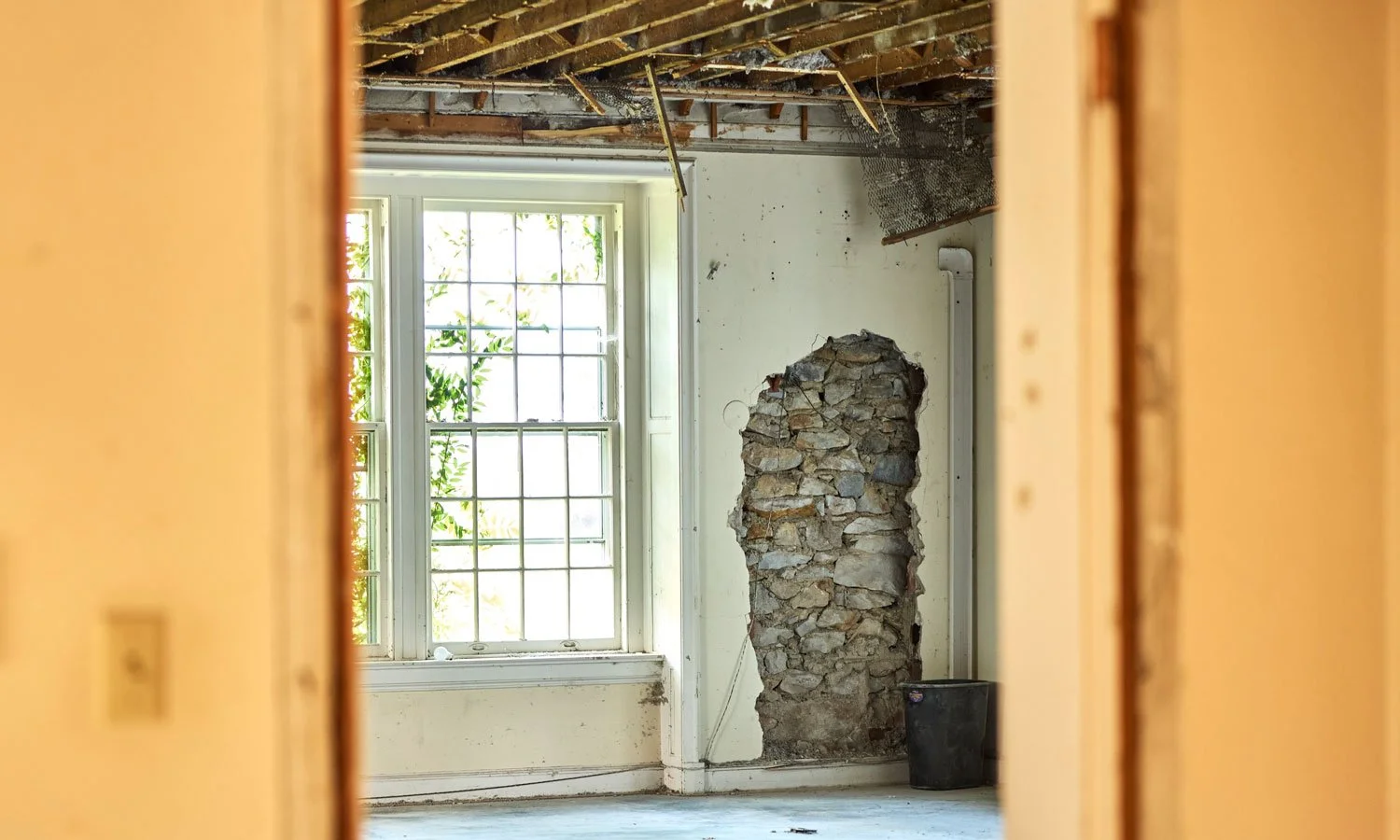
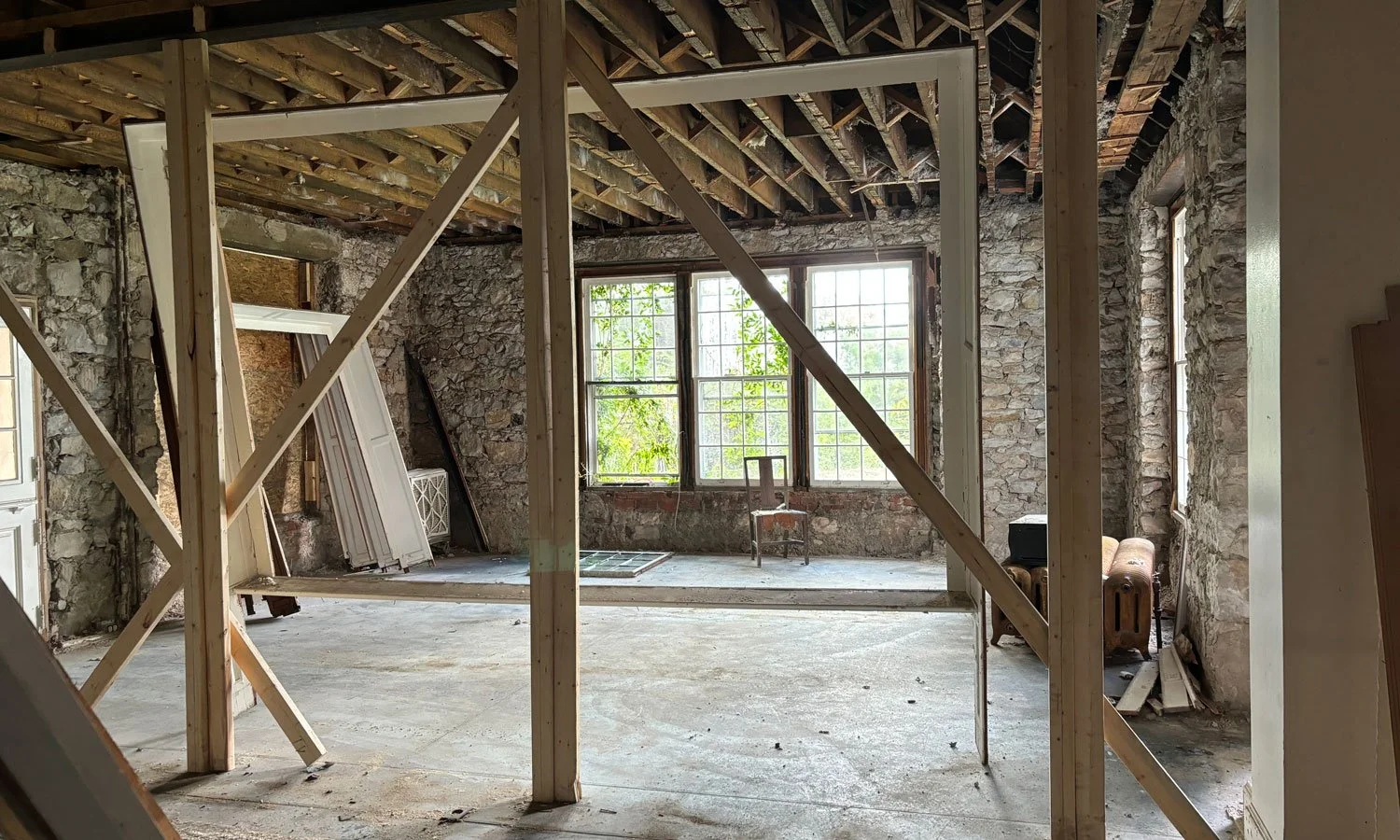
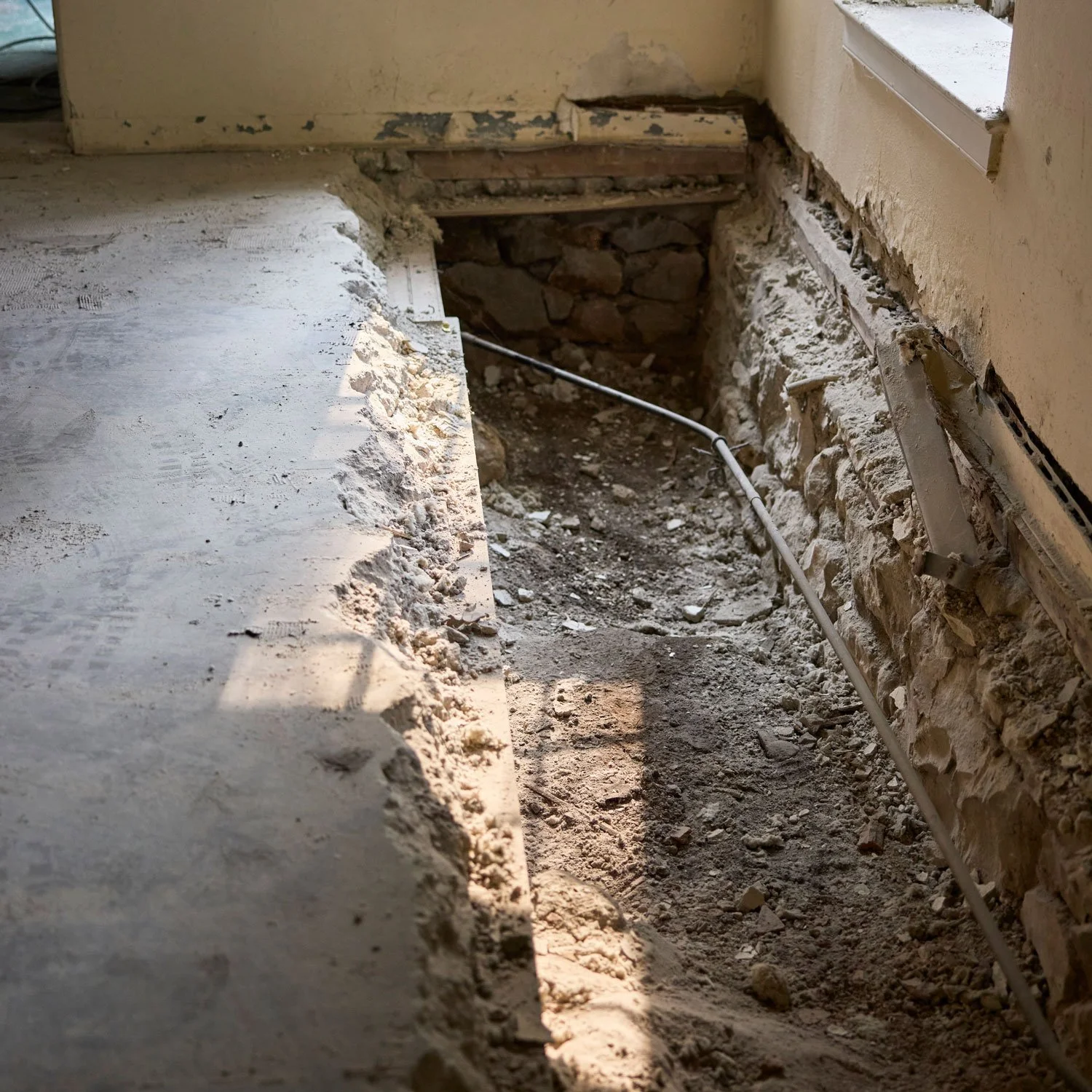
This wasn’t a simple job of lifting a few floorboards. It involved using industrial jackhammers to cut through 18 inches of concrete subfloor.
To make things more difficult, the only way to access the pipe was from above, since the basement crawl space was too shallow for a person to fit. This wasn’t a simple job of lifting a few floorboards. It involved using industrial jack hammers to cut through 18 inches of concrete subfloor. Fortunately, we agreed on a flat fee for the asbestos removal, and the contractor honoured the agreement, preventing a significant cost overrun.
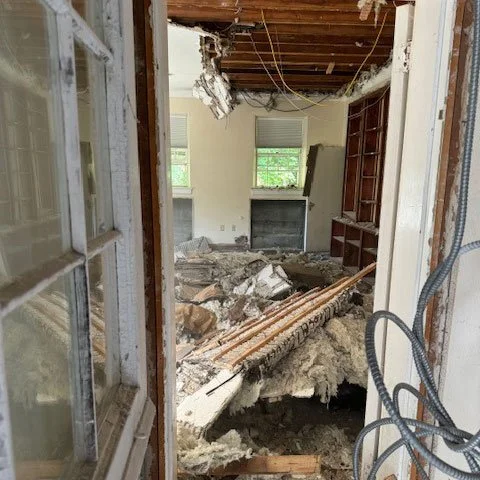
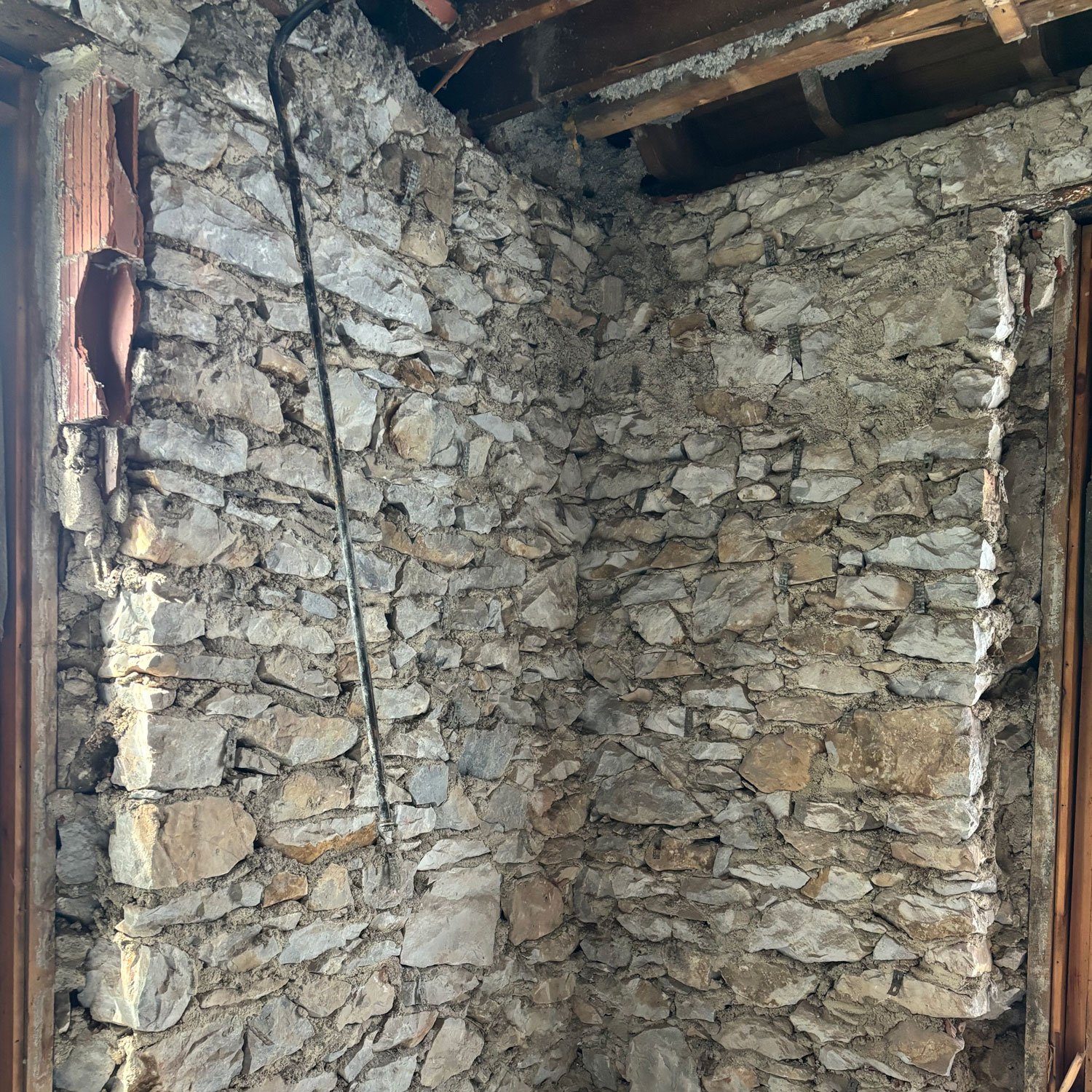
When the project was complete, the ground floor looked more like an archaeological dig than a home. The blasting exposed the original foundation, which consists of native boulders carefully arranged and pointed with vintage cement, mixed on-site from materials on the estate. We decided to leave the pipes exposed since they will be removed during The Main House renovation. The asbestos removal contractor seemed very relieved about this as the contract specified that the space would be returned to its original condition.
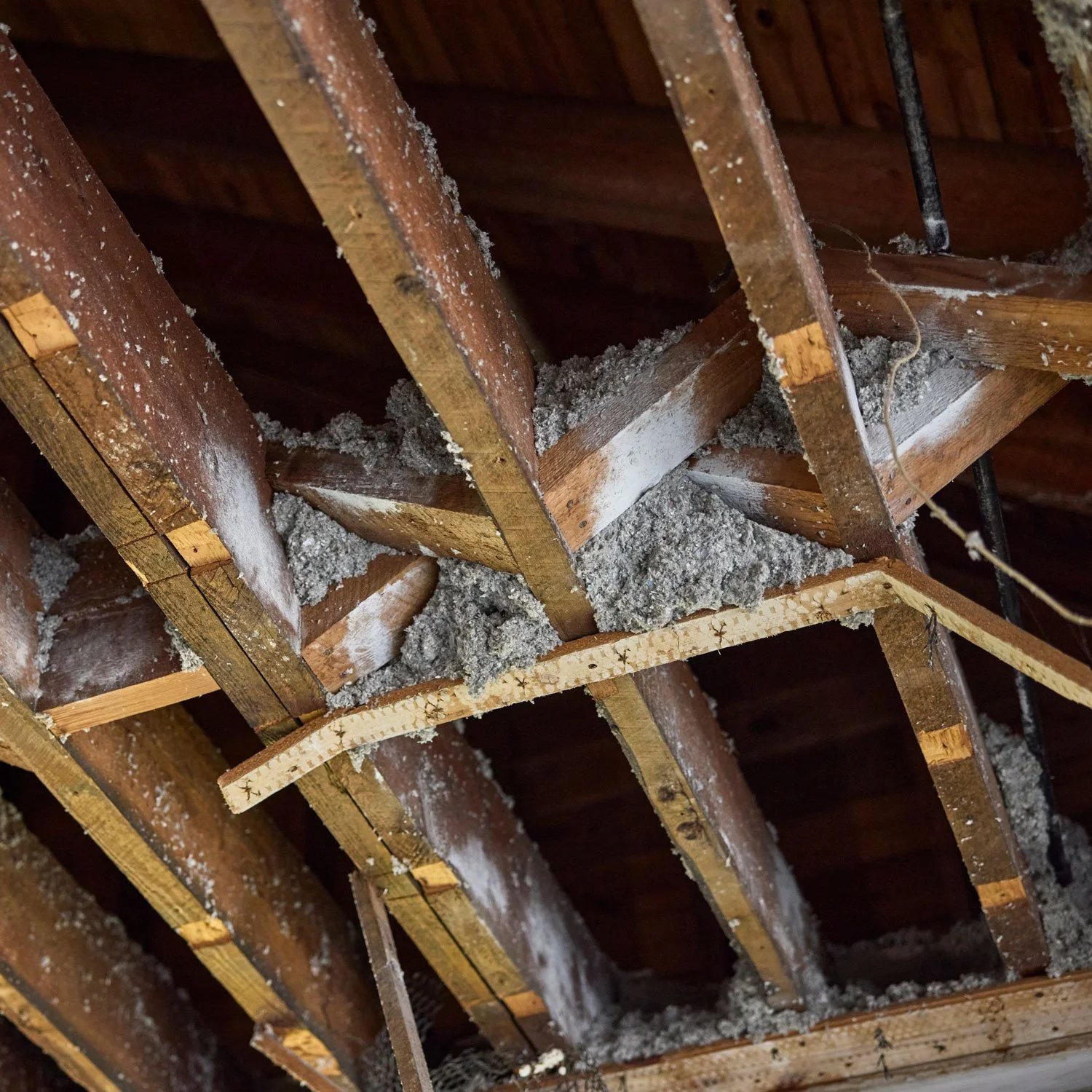
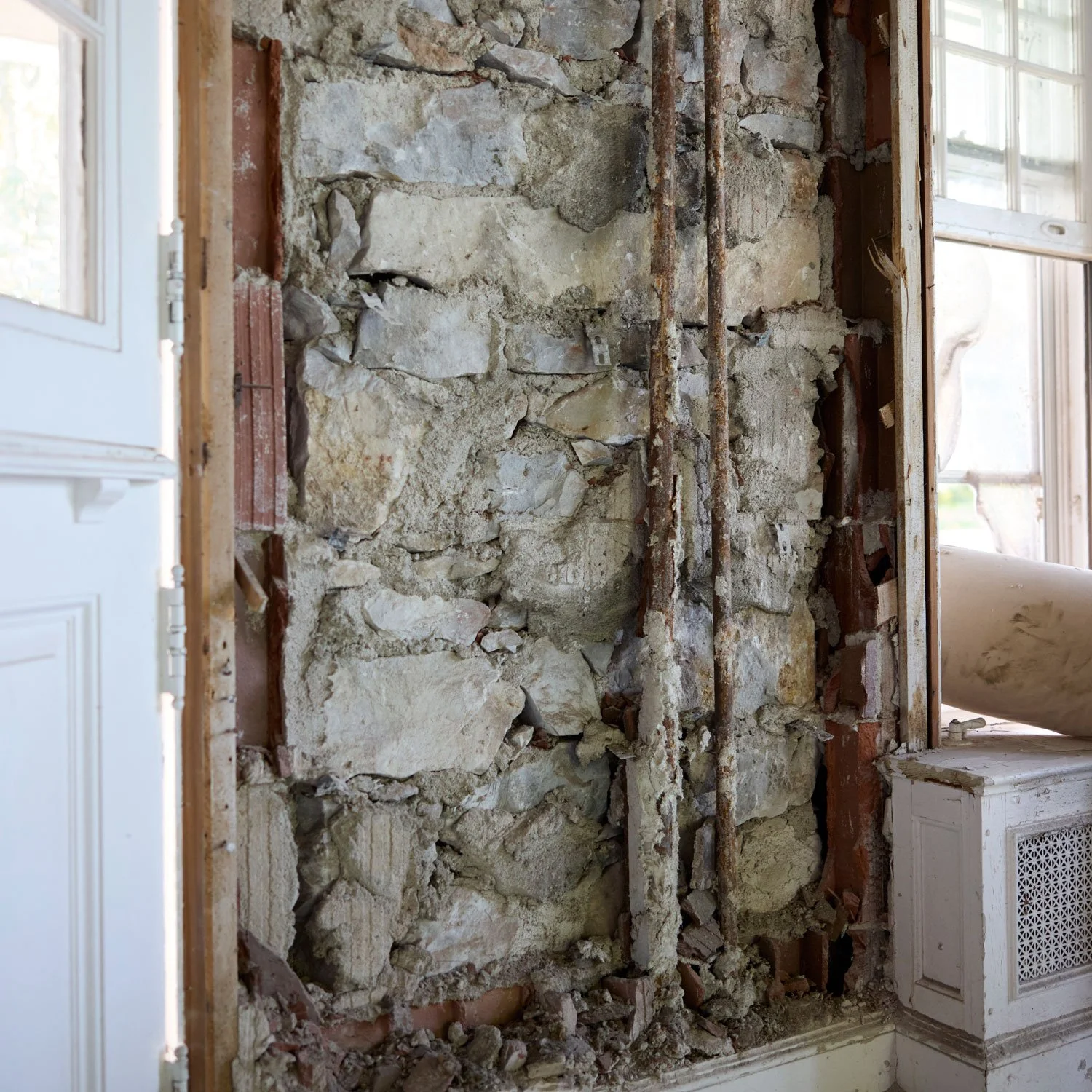
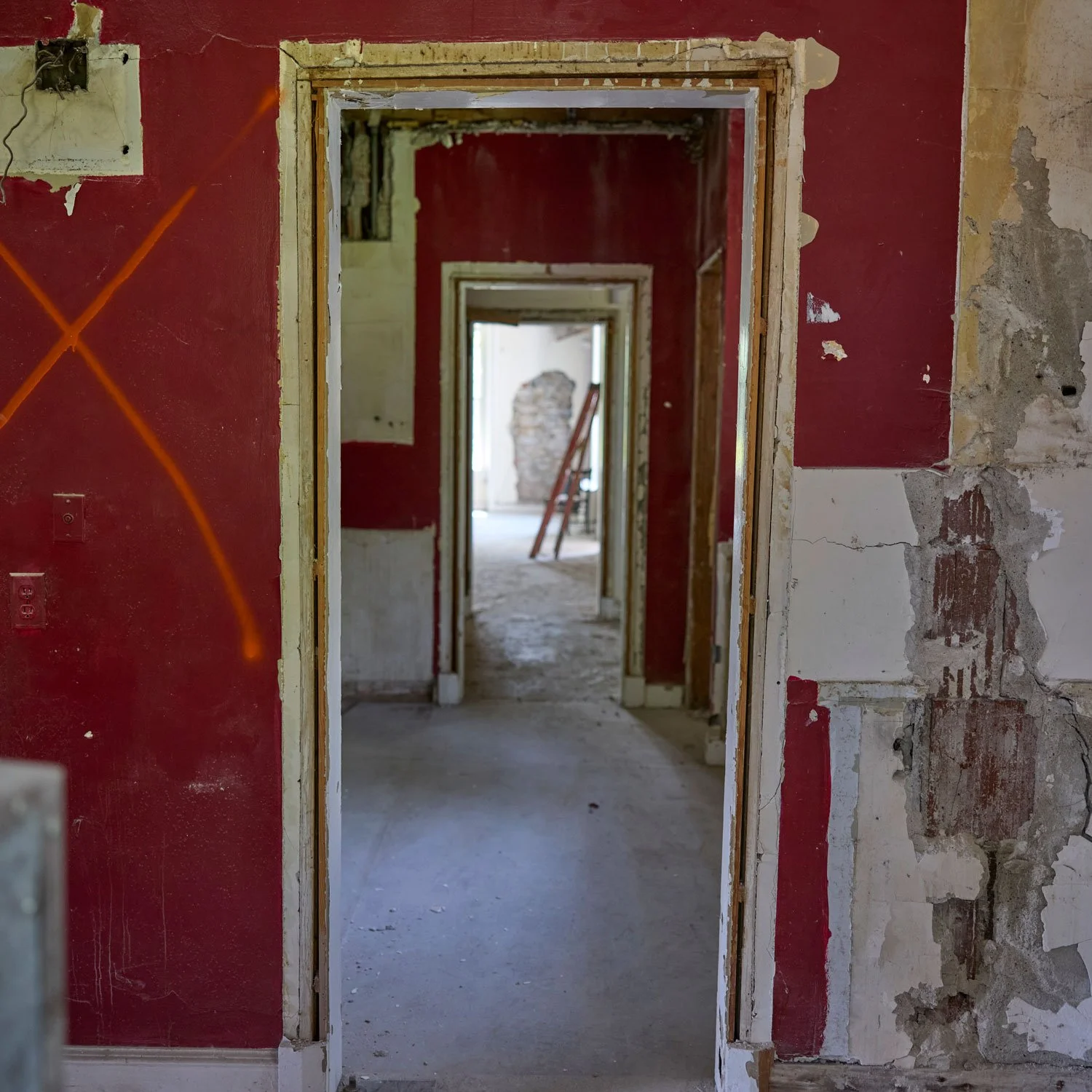
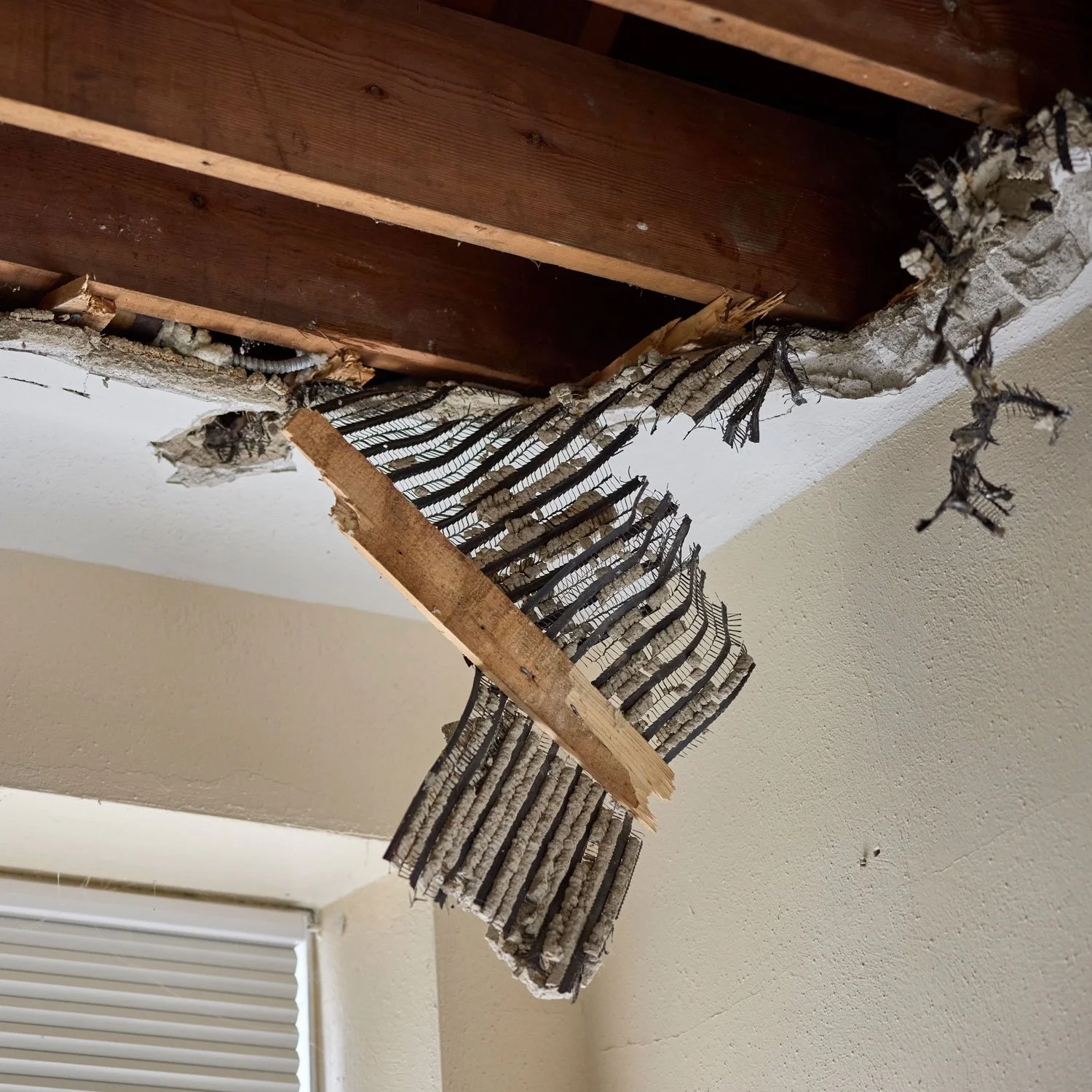
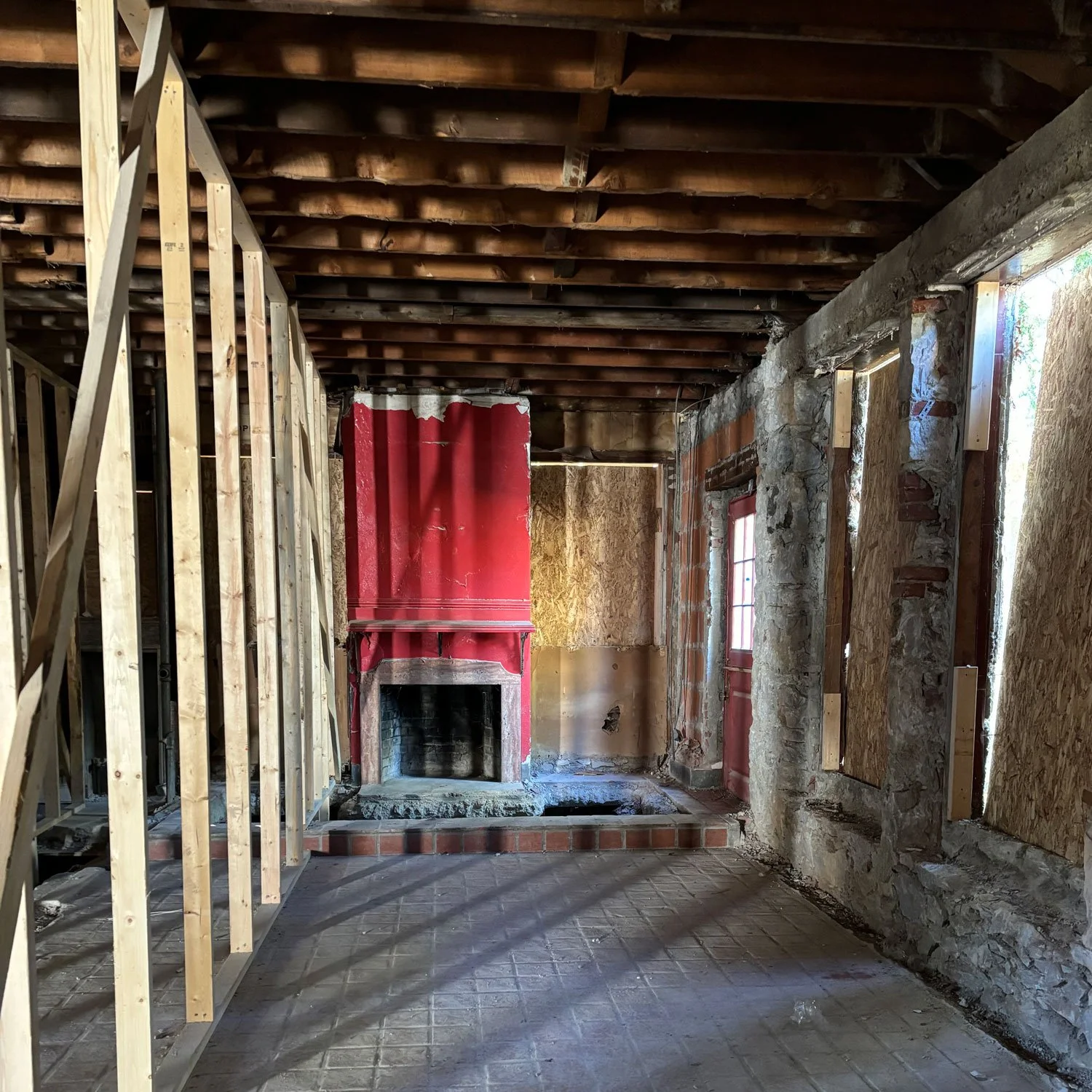
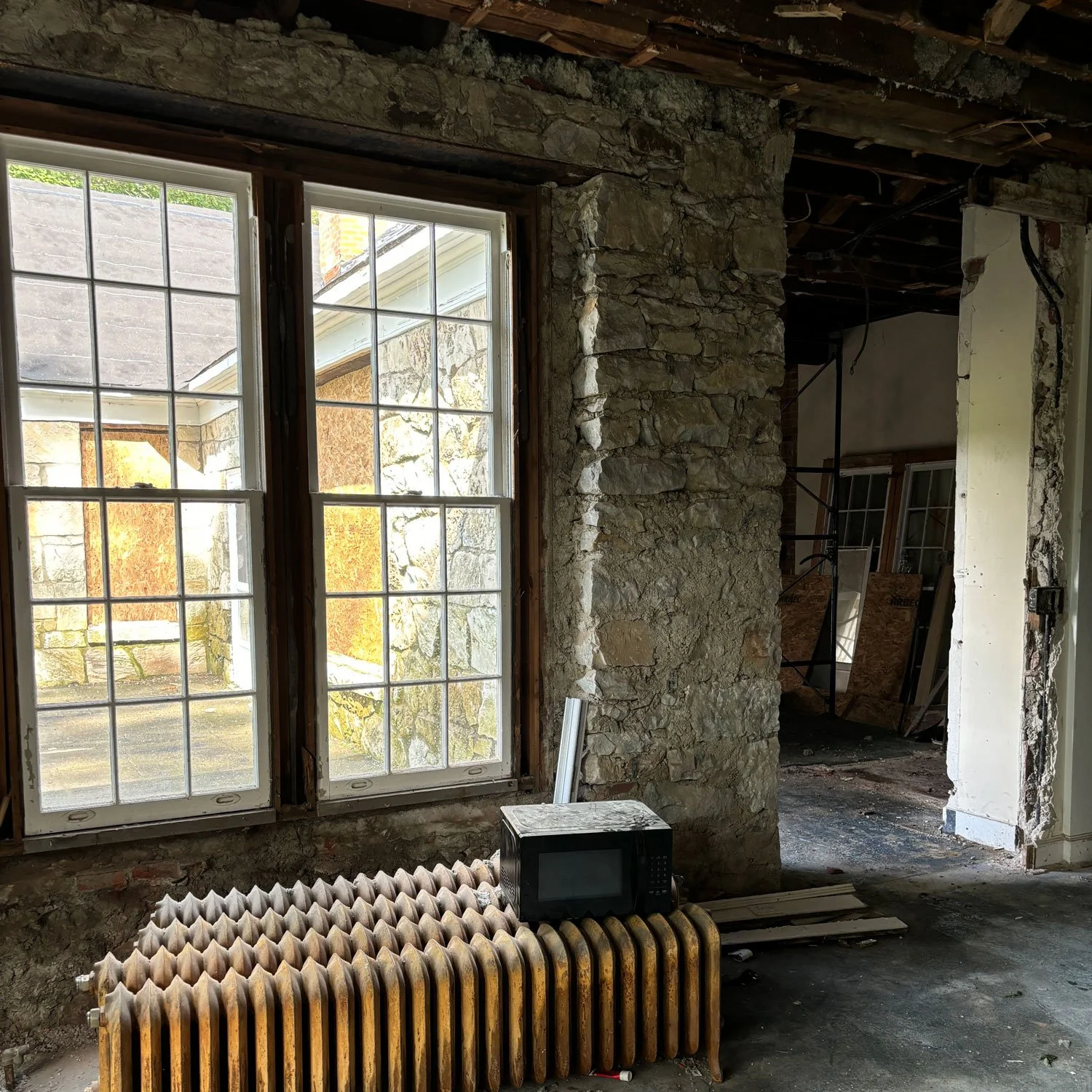
After removing the asbestos, we tested the interior plaster walls to see what we were working with. We found that, like the subfloor, they were extremely durable — almost like concrete — with felt-covered electrical wires running through them. Since the felt covering and the horsehair used to bind the drywall were both flammable, it was unsafe to remove or install new wiring in the existing walls in accordance with the current Fire Code. As a result, the interior walls needed to come down.
So, we called the demolition crew and told them to fire up their jackhammers and get to work taking down the interior walls.
Over and out.